
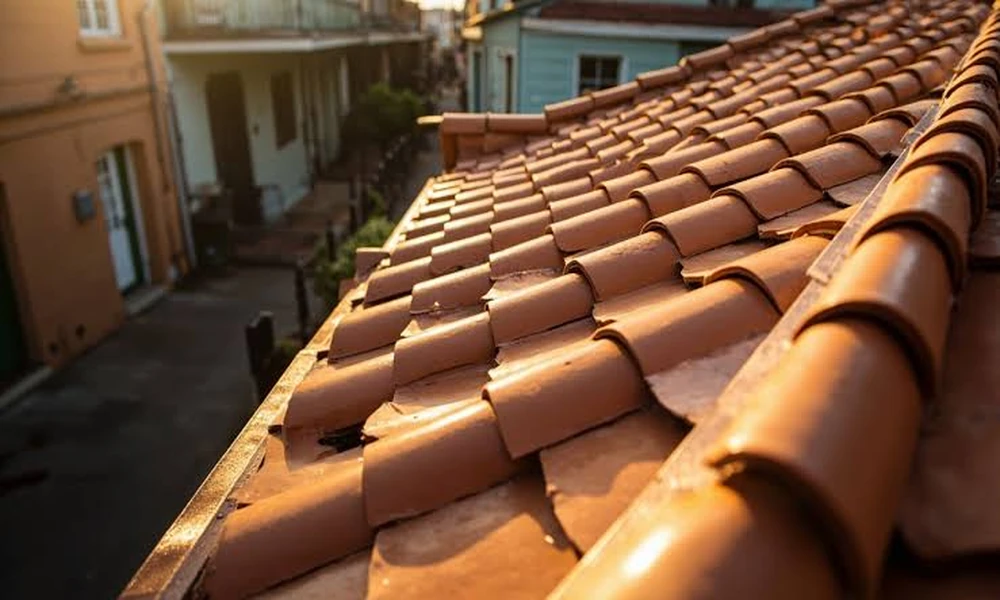

Most homeowners only look up when a brown ring appears on the ceiling, and by then the problem has usually been developing for a long time. Anyone who has spent years on rooftops around Jefferson Parish, including the crews at a roofing company in Metairie like Direct Source Renovations, which has worked out of neighboring Harahan since 1992, will tell you that trouble tends to start in the same handful of places, house after house.
Most of the reasons are local. Metairie sits low and flat between the lake and the river. It gets roughly five feet of rain in an ordinary year, and it spends half the calendar in heat and humidity that would age roofing materials anywhere. Add the occasional tropical system, and a roof here has a much harder life than the same shingles would have in Tennessee.
Timing matters too. After Hurricane Ida, thousands of parish homeowners replaced their roofs within the same few months, and a lot of that work was rushed. Those roofs are now reaching the age when installation shortcuts start to show. Here is where to look, starting at the top of the house and working down.
Up at the Ridge, Wind Finds Its First Handhold
Wind doesn’t press evenly across a roof. It pulls hardest at the ridges, hips, rakes and corners, which is why storm damage so often starts along the peak. Ridge cap shingles are bent over the top and exposed on both sides, so a cap that was nailed short or cracked during installation is the first thing to lift.
Ridge vents deserve a second look as well. They sit over a slot cut into the decking, and a poorly fastened vent can let sideways rain in during a summer thunderstorm without the homeowner ever seeing a missing shingle. From the ground, watch for ragged or uneven caps along the peak and small piles of granules in the gutter below.
Small Rubber Collars With Outsized Consequences
Every plumbing vent that passes through the roof is sealed by a pipe boot, usually a rubber collar on a metal or plastic base. The South Louisiana sun cracks that rubber, often years before the shingles around it wear out. It’s among the most common leak sources in the area, and one of the cheapest to fix if someone catches it early.
Other penetrations fail the same way, including:
- bathroom and kitchen exhaust vents
- old satellite dish or antenna mounts left behind with open screw holes
- skylight curbs and the flashing around them
- chimney chases on older ranch homes
Water from these spots rarely drips straight down. It runs along the decking or a rafter first, so the ceiling stain may show up several feet from the actual hole.
Every Addition Leaves a Seam
Many Metairie homes are 1950s and 1960s ranch houses that have grown over the decades. There’s an enclosed carport here, a den added out back there, and a patio cover tied into the main slope. Every place where a newer roof meets the original one creates a joint that has to be flashed correctly.
Low-slope sections cause the most trouble. Standard shingles are meant for pitched roofs, and when a builder runs them across a nearly flat patio cover to match the rest of the house, water backs up under them in a heavy storm. Walls cause problems too. Step flashing should be woven in with each course of shingles, and a small kick-out flashing at the bottom should steer water into the gutter. When that piece is missing, rot often shows up in the siding and wall framing before anyone suspects the roof.
The Surface Tells on the Attic
The dark streaks on so many local roofs come from algae that thrives in the humidity. The streaks are mostly cosmetic, but they hold moisture against the shingle. Newer algae-resistant shingles use copper-treated granules to slow that growth.
Blistering, curling and bald patches are more serious, and they often point to a problem inside the house. An attic that can’t breathe can go well past 140 degrees in August, and that heat bakes shingles from underneath. The usual causes are soffit vents painted shut, insulation pushed against the intake vents, or mismatched exhaust vents that fight each other. Five minutes in the attic with a flashlight will often explain why a roof aged faster than it should have.
Under the Shingles, Where Termites Wait
Decking is the part nobody sees, and it takes the worst of a slow leak. A small drip that goes on for a season keeps the plywood damp, and in this region damp wood invites Formosan termites. They’re known for building colonies above ground wherever they find steady moisture, and roof framing is one of those places.
Soft spots underfoot, sagging between rafters, and dark stains on the underside of the sheathing are warning signs. If a replacement is coming, ask up front how damaged decking will be priced, since most bids charge for it by the sheet once the old shingles are off.
Down at the Edge, Rain Picks Its Fight
The eaves have to handle everything that runs off the slopes above. Undersized or clogged gutters overflow in a hard downpour, and with live oaks dropping leaves and small branches all year, clogs are common. The overflow can run behind the gutter and into the fascia board.
A proper drip edge and a sealed starter row help in two ways. They keep water off the wood trim, and they hold the first row of shingles down when storm winds try to peel the roof back from the edge. Peeling paint on the fascia or stained soffits usually means this layer failed first.
What a Stronger Roof Looks Like Now
When a roof in this area does need replacing, many homeowners now build to the Fortified Roof standard developed by the Insurance Institute for Business and Home Safety. The main differences are a sealed deck, so water stays out even if shingles blow off, ring-shank nails that grip much harder than smooth ones, and stronger fastening along the edges. Louisiana insurers offer wind premium discounts for certified roofs, and state and parish grant money has helped many local households cover part of the upgrade.
Two practical points matter here. The grants open in rounds, so the timing depends on the program. Most rounds also rule out any work that starts before approval. And certification depends on a contractor who holds a proper roofing license and follows the inspection steps, so ask about both before signing anything.
A Ten Minute Walk Around After Any Big Storm
You don’t need a ladder to catch most early warning signs. After a strong storm, it’s worth checking:
- the ridge line for lifted or missing caps
- the gutters and splash blocks for heavy granule buildup
- the fascia and soffits for fresh stains or sagging
- the attic, in daylight, for pinholes of light or damp insulation
- ceilings near exterior walls and around bathrooms
A roof in Metairie rarely fails all at once. It usually gives out one small spot at a time, and a homeowner who knows where those spots are can catch a cheap repair before it turns into a replacement.
Six Places a Metairie Roof Gives Out Before the Rest Does
