
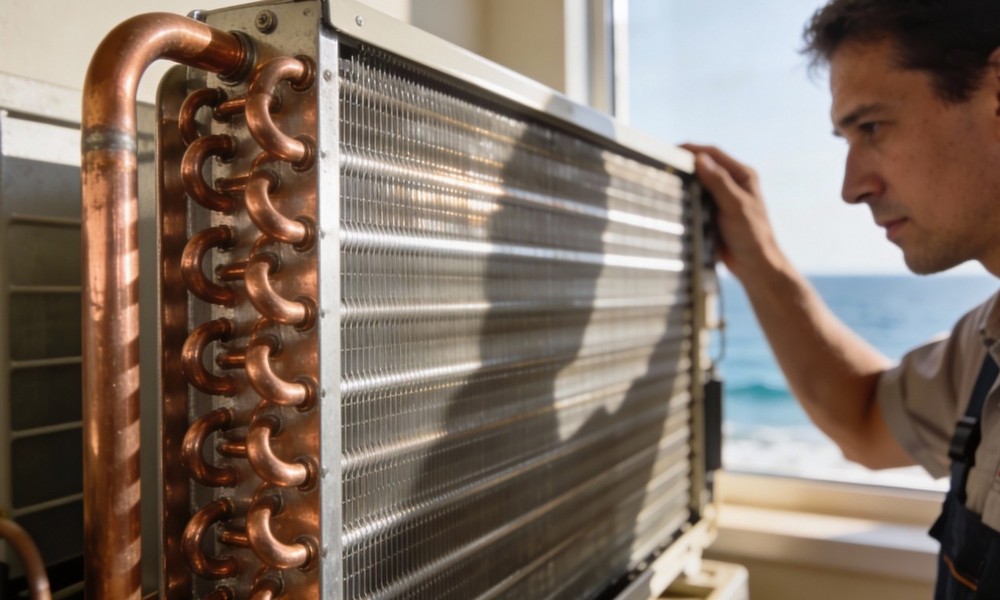

Your heat pump works hard to keep your home comfortable year-round. But have you ever wondered why some heat pump systems seem to develop rust or corrosion much sooner than expected?
The answer often comes down to environmental conditions, maintenance habits, and exposure to contaminants. Understanding these causes can help you protect your investment and avoid costly repairs.
Why Are Heat Pump Coils So Important?
Heat pump coils play a critical role in the heating and cooling process. They transfer heat between your home and the outdoor air, allowing the system to operate efficiently.
When coils become corroded, heat transfer becomes less effective. This forces the system to work harder, increases energy consumption, and can eventually lead to refrigerant leaks or component failure.
Salt Air Can Accelerate Corrosion
Homes located near coastal areas often experience faster coil deterioration. Salt particles carried by ocean breezes settle on outdoor units and begin breaking down the protective coating on the coils.
Over time, this exposure can lead to rust, corrosion, and reduced system performance. This is especially important for many California homeowners who live close to the coast.
Moisture Creates The Perfect Environment For Rust
Heat pumps are constantly exposed to outdoor weather conditions. Rain, humidity, and condensation can all contribute to corrosion.
When moisture remains on the coils for extended periods, metal surfaces become vulnerable to rust. If dirt and debris are also present, they can trap moisture against the coils and speed up the damage.
Airborne Pollutants Can Damage Coils
Did you know everyday pollutants can affect your heat pump?
Lawn chemicals, fertilizers, vehicle exhaust, and industrial pollutants can settle on coil surfaces. These contaminants may react with moisture and create corrosive compounds that slowly eat away at the metal.
Even household products stored near an outdoor unit can contribute to coil deterioration over time.
Lack Of Maintenance Makes Problems Worse
Regular maintenance is one of the best ways to prevent premature corrosion.
When coils are not cleaned routinely, dirt, leaves, and debris build up on the surface. This not only reduces efficiency but also creates conditions that encourage rust formation.
Professional inspections can identify early signs of corrosion before they become major problems.
Conclusion
Heat pump coils can rust or corrode faster due to salt air, moisture, pollutants, and lack of maintenance. Addressing these factors early helps improve efficiency, reduce repair costs, and extend system life.
Service Champions helps homeowners keep their heat pumps operating at peak performance with professional inspections, maintenance, and expert HVAC care designed for California homes.
