
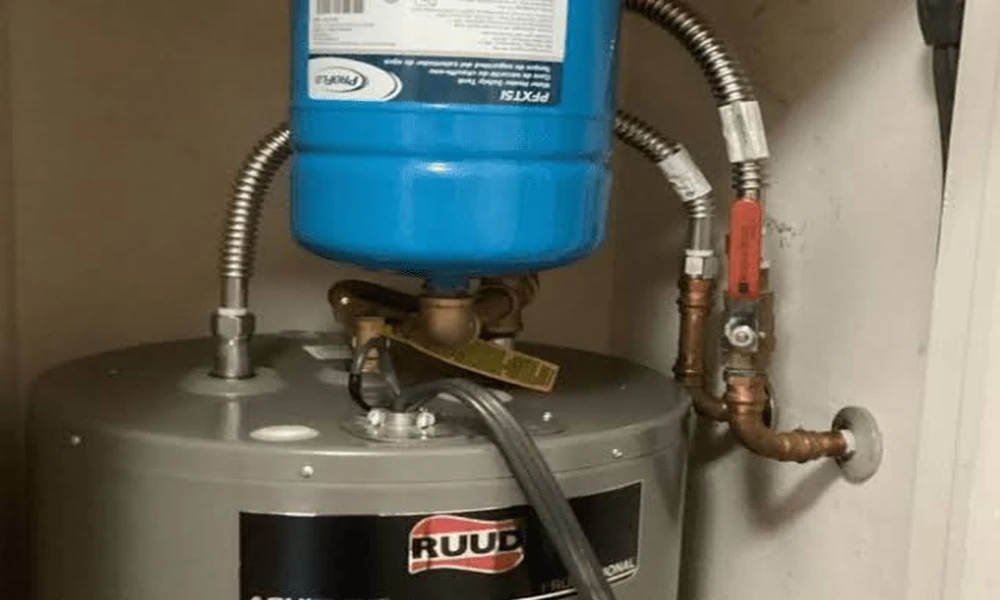

When a water heater comes out of a home near the mouth of the Mississippi, the heating element often shows what went wrong. Technicians have pulled out elements streaked with rust, covered in dry crust and crumbling apart. In lower Louisiana that damage usually comes from the water itself. During a long drought the river slows down, and heavier Gulf seawater creeps upstream along the riverbed in a formation locals call the saltwater wedge. Every town that draws its tap water from the river can then end up with salt in every pipe in the house.
Few places deal with this as directly as the lower river parishes. Plaquemines takes its water from the river at treatment plants along both banks, and the systems closest to the Gulf see sodium and chloride rise first when the wedge moves in. People usually notice the taste at the kitchen tap. Meanwhile, the water heater keeps refilling with that same salty water every time someone showers.
Homeowners trying to work out whether a tank made it through a salty season usually call a plumber who already knows the area. For Plaquemines Parish water heaters, there is a New Orleans team that has repaired, replaced and installed units for more than eight years. It answers emergency calls around the clock and quotes every job upfront at no cost. The more important question is what salt does once it gets inside the steel.
Salt Turns Water Into a Better Conductor
Corrosion is an electrical process. Fresh water carries only a weak current between two metals. Dissolved salt makes water a much better conductor, so that current flows more easily and the chemical reactions that eat metal speed up. Chloride also breaks down the thin oxide film that normally protects metal surfaces. Where that film fails, corrosion digs small, deep pits instead of spreading evenly. It’s the same reason cars parked near the coast rust faster than cars inland.
The Association of Home Appliance Manufacturers published guidance on saltwater intrusion and appliance care. It warns that salt is corrosive and can speed up the aging of anything that uses water, and it says owners should limit how long appliances are exposed. The 250 parts per million chloride limit that triggers advisories is based on taste and drinkability. It isn’t the level where corrosion starts, and corrosion begins well below it.
The Rod Built to Be Sacrificed
Most tank heaters have a glass lining fused to the steel. No lining is perfect, though. Tiny gaps exist, especially around the fittings and welds. To protect those spots, every tank holds an anode rod made of magnesium or aluminum. The rod corrodes in place of the tank, slowly wearing away so the exposed steel doesn’t.
Salty water speeds that process up a lot. A rod that would last years in fresh river water can be used up much sooner in a salty season. Once it’s gone, the corrosion moves to the tank wall, and a leak becomes a matter of time. For that reason, checking the anode is the most useful thing a homeowner here can do after a high chloride period. Some owners switch to a powered anode. It uses a titanium rod and a small electrical current, and it doesn’t dissolve. That makes it a good fit where water quality changes from season to season.
Elements, Valves and the Parts Nobody Checks
On electric models, the heating elements sit directly in the water. Salt adds to the scale that forms on them and attacks the metal sheath until the element burns out. Replacement elements sheathed in stainless steel or Incoloy, a corrosion resistant alloy, hold up better than basic copper ones.
Gas models keep the burner out of the water, but the flue runs straight up through the middle of the tank, with tank water all around it. On both types, the brass drain valve and the temperature and pressure relief valve can corrode or stick. The relief valve is the safety device that releases pressure before the tank becomes dangerous. Lifting its lever once a year, and watching that it opens and reseats cleanly, takes about a minute and is worth doing.
Tankless Units Have Narrow Passages
Tankless heaters have no tank to rust out, but their heat exchangers route water through small passages that clog and corrode faster than a tank. Most manufacturers publish water quality limits in the installation manual, and chloride is usually one of them. Running water outside those limits can void the warranty. Anyone in the lower parish thinking about a tankless unit should read that page before buying, not after a failure.
Filtering the salt out isn’t simple. Ordinary pitcher filters and boiling do nothing to dissolved salt, and reverse osmosis systems for the whole house are rarely practical. A small reverse osmosis unit under the kitchen sink gives a household fresher drinking water, but it doesn’t protect the heater.
What a Struggling Heater Tells You
Damage from salt usually shows up slowly. These are the signs worth watching for after a high chloride stretch.
- Hot water comes out rust tinted while the cold water runs clear
- The tank pops or crackles as it heats, which usually means scale and sediment on the bottom
- An electric unit runs out of hot water sooner than it used to, often because an element is failing
- White or green crust forms around the fittings, the drain valve or the relief valve outlet
- There’s dampness under the tank or a slow drip at a connection that used to be dry
Habits That Keep a Tank Going Longer
Flushing matters more here than in most places. During the worst salty periods, some local business owners drained their water heaters every few days to clear out as much salt as they could. A household doesn’t need to go that far. Still, a full flush after an advisory lifts clears out the salty water left in the tank, and a flush twice a year is a reasonable routine in between.
Temperature matters too. Every extra degree speeds up both scale and corrosion, so a setting around 120 degrees helps the tank as well as your utility bill. During advisories, AHAM also suggests shutting off the water to ice makers and fridge dispensers, so the heater isn’t the only appliance you protect. Many raised homes in the parish keep the heater in an enclosure under the house. Those units also face salty Gulf air, which rusts the outer jacket and fittings, so a tight, well vented enclosure is worth having.
Planning the Next Replacement
When a heater does need replacing, the salt should shape the choice. A model with a longer tank warranty usually has a thicker lining and sometimes a second anode. An anode you can reach and replace without moving the unit makes the inspections above realistic. For tankless models, the chloride clause in the warranty matters as much as the flow rate.
Salty water doesn’t destroy a water heater overnight. It wears the tank down faster, and how much faster depends on how long the wedge stays in the river. Owners who check the rod, flush on a schedule and buy with salt in mind usually get several more years out of each tank.
Can Salty River Water Shorten a Water Heater’s Life?
